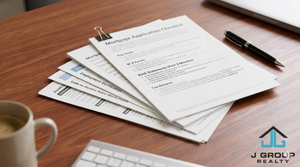
When you apply for a mortgage, underwriters don't just look at your credit score; they deep-dive into your financial footprint. In a market where multiple offers are common, having your financial house in order before you start touring homes gives you a massive competitive advantage. Gathering these documents early ensures a smoother underwriting process, prevents last-minute settlement delays, and signals to local sellers that you are a serious, qualified buyer.
To help you prepare, we’ve compiled the ultimate, updated checklist of the documents you will need to provide to your lender, from the initial preapproval phase right up to the settlement table.
1. Proof of Identity and Legal Status
Lenders must strictly verify your identity and legal residency status in accordance with federal regulations.
Government-Issued Photo ID: A legible copy of your Driver’s License, DMV Identification Card, Military ID, or Government Passport.
Residency Documentation: If applicable, a copy of your Permanent Resident Alien Card (Green Card) or work visa.
2. Income Verification & Employment History
The DMV area features a diverse workforce, from federal employees and defense contractors to corporate executives and tech entrepreneurs. Lenders will look closely at your stability and year-to-date earnings.
Recent Paystubs: Your 4 to 6 most recent consecutive paystubs, covering the last 60 days of employment and clearly showing year-to-date earnings. (Note: Lenders require all pages, even if they are blank).
W-2s and 1099s: Copies of your tax forms for the past two consecutive years.
Tax Returns: Complete copies of your federal tax returns (Form 1040) for the last two years, including all schedules and signatures.
HR Contact Information: A direct contact name and phone number for your Human Resources department to facilitate a verbal verification of employment (VOE) right before closing.
3. Asset and Account Statements
Lenders need to verify the source of your down payment, closing costs, and financial reserves.
Bank Statements: Full statements for the past two months (or most recent quarter) for all checking and savings accounts.
Investment Accounts: Statements for mutual funds, stocks, bonds, 401(k)s, or IRA accounts.
Pro Tip: When downloading statements, you must include every single page (e.g., "Page 1 of 6"). The statement must clearly display your full name, your account number, and the financial institution's logo.
4. Credit History and Clarifications
If your credit report contains anomalies, lenders will look for context before approving your mortgage loan.
Letters of Explanation (LOE): If your credit report shows multiple past addresses, recent credit inquiries, or previous negative reporting events, be prepared to provide a brief, signed letter explaining the circumstances and the resolution.
Special Circumstances: Documents Needed If Applicable
Because every financial profile is unique, you may need to provide additional documentation depending on your employment structure or personal history.
For Self-Employed Buyers & Business Owners
The local economy thrives on entrepreneurship, but self-employed borrowers face higher underwriting scrutiny.
Corporate Tax Returns: The last two years of federal business tax returns (Partnership, S-Corp, or Corporate filings) including all schedules, attachments, and K-1s.
Business Credentials: A copy of your current business license. If a formal license isn't required for your industry, a signed letter from a certified public accountant (CPA) verifying that they have prepared your taxes and that you have been operating for a specified number of years will be necessary.
For Buyers with Alternative Income or Deficit Obligations
Alternative Income Streams: If you use income from Social Security, disability, pensions, alimony, or child support, you must provide proof of continuity (such as an award letter or a court-ordered divorce decree) demonstrating the income will continue for at least three years.
Divorce & Separation: Complete, signed copies of divorce decrees, separation agreements, and property settlements, which outline any ongoing alimony or child support liabilities.
Student Loans: If your student loans are currently deferred or on an income-driven repayment (IDR) plan, you must provide documentation showing the projected payment or the terms of the deferment. Lenders must calculate these into your debt-to-income (DTI) ratio.
Previous Bankruptcies: If you have ever filed for bankruptcy, you must provide complete filing documents, a list of creditors, and official discharge papers.

For Active Duty Military & Veterans (VA Loans)
With major installations like Fort Myer, Fort Belvoir, and the Pentagon nearby, VA loans are highly prevalent in Northern Virginia.
Military Documentation: A copy of your DD-214 (if separated/retired) or current Active Duty Orders if relocating to the area.
Certificate of Eligibility (COE): While your lender can often pull this for you, having your Certificate of Eligibility ready speeds up the process.
Disability Income: Documentation showing any VA disability compensation or retirement benefits.
5. Once You Find a Home: Under Contract Documentation
Once your offer on a property is accepted, the transaction shifts into high gear, requiring immediate collaboration between you, your real estate agent, and your loan officer.
The Sales Contract: A fully executed, signed Northern Virginia/D.C. Regional Sales Contract, including all mandatory addenda and disclosures.
Earnest Money Deposit (EMD): A copy of your EMD check or wire transfer confirmation, followed by an updated bank statement showing that the funds have officially cleared your account.
Homeowners Insurance: The name, company, and contact information for your chosen insurance agent so the lender can coordinate the binder before closing.
Navigating the Financing Process with Confidence
No two mortgage applications are exactly alike. While this checklist covers the essentials, underwriting guidelines are dynamic, and your lender may ask for clarifying documentation as they review your file.
The best strategy for a stress-free settlement? Be prompt and patient. Responding to lender requests immediately ensures your loan stays on track, protecting your contract timelines and your earnest money.
Partnering with a seasoned local real estate professional means you are never navigating this paperwork alone. Every member of the J Group with Pearson Smith Realty work hand-in-hand with top-tier regional and local lenders to ensure your financing is seamlessly aligned with your purchase goals.
Are you looking to buy a home in Northern Virginia? [Contact our team today] to connect with our trusted network of local lenders and start your home buying journey on solid financial footing.